Philosophy and Artificial Intelligence Conference Held in Kenya Emphasis on Continuing Intercultural Dialogue
This event coincided with UNESCO's World Philosophy Day and within the framework of the organization's 2025 global theme, Artificial Intelligence and Education
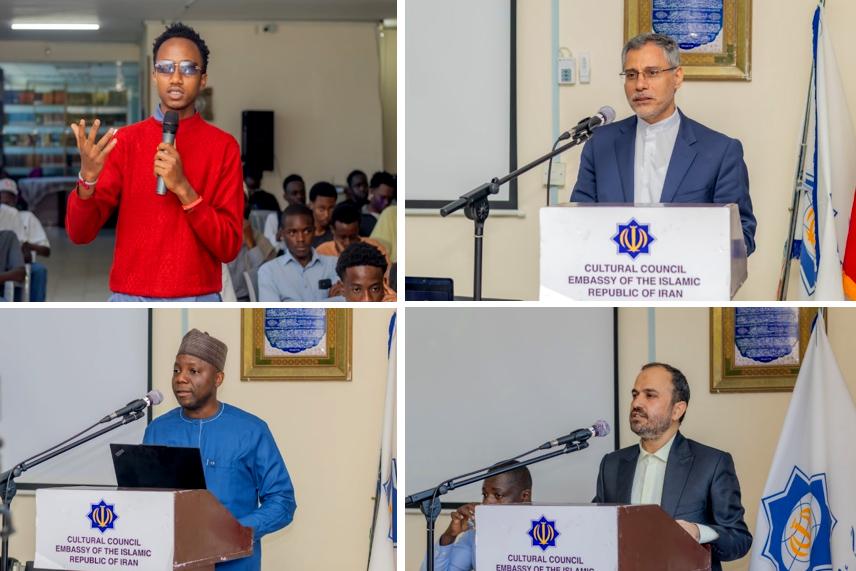
The "Philosophy and Artificial Intelligence" meeting was hosted by the Cultural Counselor of the Islamic Republic of Iran in Nairobi and was held in cooperation with the Kenyan Philosophy Association and the UNESCO Regional Office in Kenya.
This event coincided with UNESCO's World Philosophy Day and within the framework of the organization's 2025 global theme, Artificial Intelligence and Education, and was registered as one of the official programs of the UNESCO Global Network this year .
The program began with opening remarks by Mehdi Beiki, Cultural Counselor of the Islamic Republic of Iran. He emphasized the historical role of philosophy in guiding technological trends and the importance of intercultural dialogue.
Referring to the view of Supreme Leader Ayatollah Khamenei, Beiki recalled that from his perspective, artificial intelligence is not merely a technical tool, but rather a strategic arena that can determine the future of the power and independence of nations.
He explained that the Supreme Leader has called on Iran to be among the top ten countries in the field of artificial intelligence, while at the same time warning that disregard for ethical principles and the lack of human oversight could turn this technology into a dangerous factor.
Professor Nyarwat, President of the Philosophical Society of Kenya, further described this tripartite collaboration as an important step in raising the level of philosophical discussions in the East African region.
The representative of the UNESCO office in Nairobi also explained in his speech why preserving human agency in the age of automation and artificial intelligence was chosen as the main focus of the 2025 global agenda and introduced this conference as part of the official UNESCO global events program .
Ali Gholampour, Ambassador of the Islamic Republic of Iran to Kenya, emphasized Iran's scientific capacities in the fields of philosophy, futures studies, and technological ethics, and called Iran's joint cooperation with UNESCO and Kenyan academic institutions a sign of the two countries' commitment to developing a responsible discourse on new technologies .
Abbas Nasirifard presented online at a conference on “Artificial Intelligence and the Decolonization of Knowledge Production.” He posed the central question of the new era as whether artificial intelligence can be a tool to end the scientific dominance of powerful countries or whether it will itself become a new form of intellectual and epistemic colonization.
Dr. Nasiri Fard emphasized that the future of global knowledge depends on the level of active participation of non-Western societies in this field, and that complete reliance on artificial intelligence without human moral and rational oversight is a strategic mistake.
He considered artificial intelligence a great blessing for reducing the scientific gap between countries, provided that it is accompanied by ethical management, indigenous development, and broad participation .
The need for joint research and coordinated policy development
Following his speech, four expert presentations by University of Nairobi professors in the areas of African philosophical anthropology, digital governance, freedom of conscience in the age of machine decision-making, and epistemological evaluation of educational technologies were delivered, complementing the topics raised in the keynote address .
Professor Patrick Moignier, President of the University of Tangaza, provided an extensive analysis of the place of African philosophical traditions—particularly the concept of “ubuntu”—in shaping ethical and human-centered approaches to artificial intelligence.
He emphasized the need to coordinate national and regional policies so that AI strategies reflect African priorities and protect the public interest.
Moynier called for investments in teacher training and educational reforms so that educators can teach critical thinking, digital literacy, and ethics in the age of artificial intelligence.
He also emphasized the importance of effective community participation, saying that citizens, civil society organizations, and local groups should be actively involved in the process of shaping AI tools and frameworks to ensure equitable and sustainable outcomes .
Ngandeo Ngata, Director of UNESCO's Philosophy and Democracy Department in Nairobi, told the meeting that UNESCO has been focused on developing ethical guidelines and global frameworks to ensure that artificial intelligence remains human-centered.
He emphasized that cooperation among countries is essential to ensure equitable access, responsible implementation, and protection of human rights in AI-based education .
Another speaker at the meeting, Oriwu, gave a detailed presentation on the ethical and governance implications of AI in Kenya's education sector, noting that the country is at a critical juncture in the national adoption process of AI technologies.
Ngandeo Ngata, Director of UNESCO's Department of Philosophy and Democracy in Nairobi, explained that UNESCO has been focused on developing ethical guidelines and global frameworks to ensure that AI remains human-centered.
He emphasized that cooperation among countries is essential to ensure equitable access, responsible implementation, and protection of human rights in AI-based education .
Issa Boke, president of the Kenyan Philosophical Society and professor at Kenyatta University, addressed the issue of freedom of conscience and artificial intelligence, emphasizing that artificial intelligence should not undermine human moral autonomy and decision-making power.
He said: Educational institutions must institutionalize ethics, critical thinking, and the ability to recognize human nature in digital learning structures .
Another speaker at the meeting, Karoki, in his presentation on the opportunities and threats of artificial intelligence in higher education, emphasized the need to adopt a balanced and philosophical approach to the adoption of artificial intelligence in higher education, saying that universities must maintain human reasoning, ethical discernment, and critical thinking as the core pillars of research.
Karoki called for the development of frameworks that combine technological power with deep philosophical reflections so that artificial intelligence serves scientific and social progress, not hinders it .
This meeting paved the way for the proposal of several joint projects, including the launch of a joint working group on "Artificial Intelligence Ethics with an African-Islamic Approach", planning a joint PhD course in Philosophy of Technology between the Universities of Iran and Nairobi, and drafting an East African regional charter on indigenous knowledge and artificial intelligence .
The meeting, which was welcomed by Kenyan students and their active questions and answers, ended with a common agreement that artificial intelligence should be guided by strong ethical arguments, respect for cultures, and human-centered educational models.
Participants emphasized the need for joint research, coordinated policy development, and continued intercultural dialogue so that technology enhances human capabilities rather than replacing them. The conference attendees emphasized the need for continued cooperation between Kenya, Iran, UNESCO, and academic centers.

Write your comment.